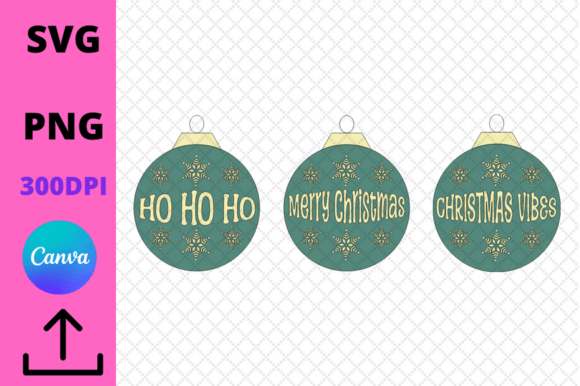
Retro Christmas Ornaments: A Designer's Review for Holiday Stitching
As we approach the holiday season, the pressure to create unique, high-quality items for our craft businesses and personal gifting lists intensifies. I recently took a close look at the Retro Christmas Ornaments design set, evaluating it not just as a pretty image, but as a functional machine embroidery design ready for real-world application. For those of us running small shops or selling on Etsy, the difference between a design that looks good on a screen and one that stitches out beautifully on fabric can make or break a product line. This review breaks down how these illustrations perform when put through the paces of actual production.
First Impressions and Visual Personality
The immediate appeal of Retro Christmas Ornaments lies in its nostalgic charm. In a market saturated with generic, overly shiny holiday graphics, this collection offers a grounded, vintage aesthetic that feels warm and inviting. The shapes are classic—think rounded baubles, teardrops, and starbursts—but the execution suggests a mid-century modern influence that resonates well with current interior and fashion trends.
From a designer's perspective, the layout is clean. The lines appear distinct enough to translate well into thread, avoiding the muddy look that sometimes plagues complex digital art when converted to an embroidery file. The visual personality here is playful yet sophisticated, making it versatile enough for a child's stocking or a boutique home decor pillow. It strikes a balance that allows it to function as both a focal point and a subtle accent, depending on how you scale it.
Real-World Application: From Mockup to Finished Product
To truly test the viability of this design, I envisioned a specific project scenario: a limited run of custom tote bag designs for a local holiday market. The goal was to create a reusable shopping bag that customers would want to keep year after year. Using the Retro Christmas Ornaments motif, I simulated the placement on a heavy canvas tote. The result was promising. The bold outlines of the ornaments would likely hold up well against the texture of canvas, providing excellent contrast.
Beyond tote bags, this design shines in several other areas:
- Sweatshirt Embroidery: The retro vibe pairs perfectly with fleece or French terry. Placed on the left chest or as a large back graphic, it elevates a basic garment into a statement piece.
- Baby Embroidery: Softened color palettes using pastels could transform these ornaments into gentle nursery decor or personalized baby blankets.
- Embroidered Patch Creation: The defined borders make these ideal candidates for cut-and-sew patches, allowing crafters to add a festive touch to denim jackets or hats without committing to direct stitching on difficult fabrics.
- Kitchen Textiles: Tea towels and aprons benefit from the flat, illustrative style, which tends to lie flatter than highly dimensional 3D puff designs.
For an Etsy seller or creative entrepreneur, the versatility of this Illustrations category means you can expand your inventory quickly. You aren't limited to one product type; the same digital embroidery file can generate revenue across apparel, home goods, and accessories.
Technical Considerations and Fabric Compatibility
While the aesthetic is strong, practical embroidery requires us to be critical about technical execution. When working with Retro Christmas Ornaments, attention must be paid to the stitch density. Retro styles often rely on solid blocks of color or specific textural fills. If the design utilizes heavy fill stitch areas, it may become stiff on lightweight fabrics.
I recommend exercising caution in the following scenarios:
- Stretchy Fabrics: On knits or jersey, dense stitching can cause puckering. Always use a high-quality cut-away stabilizer to maintain the integrity of the shape.
- Small Hoop Sizes: If you are adapting this for a cap or a small pocket, ensure the intricate details of the ornament patterns do not get lost. Tiny elements might need simplification if scaling down significantly.
- Dark Fabrics: Check the thread colors specified in the design. If the retro palette relies on muted tones, they may vanish against black or navy fabric. You may need to manually adjust the color sequence or add a underlay stitch to boost vibrancy.
- Curved Surfaces: Stitching on caps requires careful hooping. The flat nature of some illustrative designs can distort if the fabric isn't pulled taut enough in the frame.
It is also crucial to consider the type of stitches used. If the design incorporates satin stitch borders, ensure the column widths are appropriate for your machine's capability to prevent looping. Conversely, if it uses running stitch for detailing, verify that the stitch length is short enough to prevent snagging during washing but long enough to avoid perforating delicate materials.
Enhancing Brand Value and Customer Trust
In the world of commercial embroidery, consistency is key to building brand trust. Using a cohesive set like Retro Christmas Ornaments helps establish a recognizable visual language for your small shop product lines. When a customer sees a high-quality finish with crisp edges and vibrant colors, it reinforces the perception of value.
A poorly digitized design can ruin a handmade product, leading to returns and negative reviews. However, when a design like this is executed correctly—with proper tension, suitable fabric choice, and neat backing removal—it enhances the giftability of the item. Customers are more likely to share photos of their purchases on social media if the finished product looks professional, driving organic engagement for your business.
Practical Notes for the Working Designer
Before committing to a full production run, always adhere to these best practices:
- Test on Scrap Fabric: Never skip the stitch-out test. Use the exact fabric and stabilizer combination you plan to use for the final item.
- Check Contrast: View your test stitch-out in black and white (or take a photo and desaturate it) to ensure the design elements distinguish themselves clearly without relying solely on color.
- Verify Licensing: If you intend to sell items made with Retro Christmas Ornaments, confirm the license terms. Some design assets are for personal use only, while others allow for commercial custom apparel sales.
- Inspect Details: Look closely at small corners and intersections. These are common failure points where threads can bunch or break.
- Review File Formats: Ensure you have the correct file format for your specific embroidery machine to avoid conversion errors that could alter stitch paths.
Ultimately, Retro Christmas Ornaments offers a solid foundation for holiday creativity. It bridges the gap between trendy aesthetics and functional design, provided the maker respects the technical requirements of the medium. Whether you are creating a single personalized gift or stocking shelves for the holiday rush, this design has the potential to deliver results that delight customers and stand the test of time.