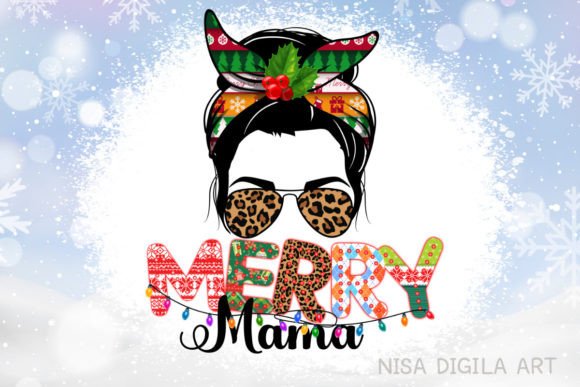
Review: Christmas Merry Mama Sublimation for Holiday Embroidery
As a designer who spends more time staring at stitch maps than I do sleeping during the holiday rush, I approach every new digital embroidery file with a healthy dose of skepticism. We've all been there: you buy a cute graphic online, convert it, and end up with a puckered mess that looks nothing like the preview. That's why I took a close look at the Christmas Merry Mama Sublimation design before committing it to any client projects. While this asset originates in the world of sublimation and Illustrations, my job is to determine if it holds up when translated into thread for real-world handmade products.
First Impressions: Mood and Visual Personality
The moment I pulled up the artwork, the vibe was unmistakable. It captures that cozy, slightly chaotic energy of a mother trying to keep the holidays magical while barely holding it together. The layout is centered and bold, which usually translates well to embroidery, but the devil is always in the details. The typography feels playful yet legible, avoiding those overly swirly fonts that turn into thread blobs once stitched out. For a holiday embroidery project, the balance between whimsy and readability is crucial. This design leans heavily into the "festive mom" aesthetic, making it an instant candidate for boutique branding or personalized gifts where emotional connection drives sales.
Translating Sublimation Art to Stitch
Here is the reality check: sublimation designs are raster-based images meant for heat transfer, not vector paths meant for needles. To use Christmas Merry Mama Sublimation effectively as a machine embroidery design, it requires careful digitizing. If you are buying this as a pre-digitized file, you need to inspect the stitch types immediately. Does it rely too heavily on dense fill stitch areas that might stiffen a soft baby onesie? Or does it utilize satin stitch columns for the lettering to maintain crisp edges?
In my assessment, the strength of this design lies in its potential for high contrast. When planning the thread colors, I'd recommend sticking to classic reds, greens, and whites, but don't be afraid to test a monochromatic look for a modern twist. A black-and-white mockup test is essential here to ensure the stitch density doesn't cause the lighter elements to get lost against darker fabrics.
Real-World Application: The Tote Bag Test Case
To truly evaluate this design, I imagined a specific scenario: a custom order for a local boutique needing fifty tote bag designs for a holiday market. The client wanted something that screamed "gift-ready" without looking mass-produced. Christmas Merry Mama Sublimation fits this brief perfectly, provided the execution is flawless.
For a canvas tote, the fabric texture is forgiving, allowing for a higher stitch count without excessive puckering. However, if we pivot this same design to a stretchy knit for sweatshirt embroidery, the approach changes entirely. On a fleece hoodie, the negative space in the illustration becomes critical. If the digits are too tight, the fabric will pull, distorting the "Mama" text. In this context, using a cut-away stabilizer is non-negotiable to maintain the integrity of the finished product.
I also considered this for an embroidered patch. Given the illustrative nature of the source material, creating a merrow-edge patch with this design could result in a highly sellable small shop product. Patches allow you to bypass the limitations of stitching directly onto difficult garments, offering a versatile add-on for customers who want to customize their own jackets later.
Navigating Fabric and Hoop Limitations
Not every surface is created equal. While this design shines on flat, stable materials like tea towels or pillow covers, caution is required elsewhere. If you attempt this on a curved surface like a cap, the horizontal width of the text might exceed standard hoop capabilities or cause registration issues on the front panel. Always confirm your hoop size limits before promising a customer a hat version.
Furthermore, textured fabrics like waffle weave or heavy terrycloth can swallow fine details. The running stitch outlines often used in detailed illustrations may disappear into the pile of a thick towel. In these cases, simplifying the design or increasing the stitch weight of the outlines can save the project from looking amateurish. For baby embroidery, where skin sensitivity is a concern, ensuring there are no scratchy jump stitches on the back is vital. A proper backing or top stabilizer can make the difference between a cherished heirloom and an itchy nuisance.
Commercial Viability and Brand Consistency
For Etsy sellers and creative entrepreneurs, the visual appeal of a design directly impacts buyer engagement. Christmas Merry Mama Sublimation has strong "scroll-stopping" potential because it taps into a relatable niche. However, consistency is key. If you are building a brand around handmade holiday goods, this design needs to match your existing portfolio's quality. Poor digitizing—visible jagged edges or uneven spacing—can erode customer trust instantly.
When listing this as a custom apparel option, clarity in your product photos is paramount. Use printable mockups to show how the design scales on different items, but always follow up with photos of the actual stitched item. Customers appreciate seeing the texture of the thread and how the design sits on the garment. This transparency builds professionalism and justifies a higher price point for your craft business.
Essential Designer Notes for Success
Before you launch this design into production, here is my practical checklist based on years of trial and error:
- Test on Scrap First: Never run a new design on final inventory. Stitch it on the exact same fabric and stabilizer combination you plan to use for the sale.
- Check Licensing: Since this starts as a sublimation graphic, verify if the license permits conversion to embroidery for commercial sale. Some artists allow personal use only.
- Inspect Small Details: Zoom in on the digitized file. Are the tiny dots in the illustration actually stitchable, or will they cause thread breaks?
- Contrast Matters: Ensure your thread colors pop against the fabric. A dark green thread on a navy sweatshirt might look sophisticated in person but unreadable in photos.
- Wash Testing: If selling wearable items, wash and dry the sample three times. Check for fraying or color bleeding to guarantee durability.
Ultimately, Christmas Merry Mama Sublimation offers a charming foundation for a variety of embroidery projects. Whether you are creating a personalized gift for a friend or stocking your online store with festive gear, the success lies in the preparation. By respecting the limitations of the medium and prioritizing quality control, you can transform a simple illustration into a standout design asset that resonates with customers and stands the test of the season.